Swallows
To the LighthouseSwallows enter the abandoned Ramsay house and nest in its drawing-room. Their occupation is one detail in a broader transformation: the family’s rooms, once inhabited, become exposed to weather, decay, and nonhuman life. The birds’ presence makes the house’s abandonment visible while also showing that the empty building does not remain empty for long.
Nesting in the deserted house
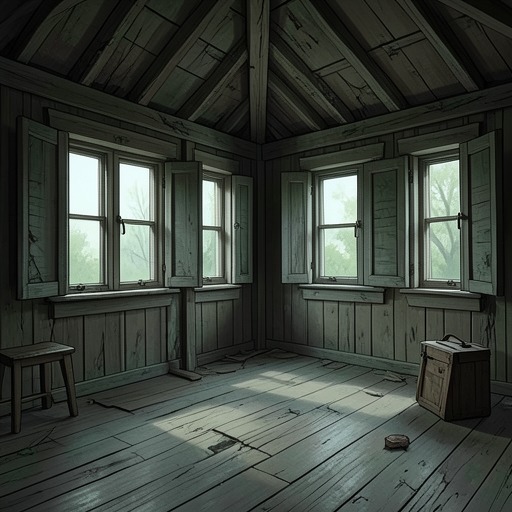
The Swallows build in the drawing-room, where the floor becomes strewn with straw. Their nest appears alongside other signs of the house’s deterioration: plaster falls, rafters are exposed, and rats move behind the wainscots. These changes are not presented as isolated damage but as an unfolding displacement of domestic use. A room once belonging to the household becomes habitat.
The birds’ return belongs to the same seasonal process as the self-sown poppies and the growth spreading through the garden. Nature occupies the house without restoring it to human order: the Swallows make a nest among the debris, while the structure continues to decay. Their presence is therefore both ordinary and unsettling, joining the familiar cycle of animal life to the loss of a family home.
The beam and an indifferent landscape
During winter, the Lighthouse beam briefly enters the rooms and passes over the Swallow and other remnants of the house’s life. Its look treats the bird, the thistle, the rat, and the straw with the same equanimity. The Swallows are not singled out as a sign that human comfort will return; they belong to a landscape in which living things persist without answering human grief.
That indifference extends beyond the house. The novel sets natural beauty and seasonal change beside the evidence of war, including a silent ship and a stain on the sea, and asks whether Nature completes or consoles what human beings endure. The Swallows’ untroubled nesting does not resolve that question. Instead, their presence contributes to the contrast between the continuity of nonhuman life and the vulnerability of human meanings and attachments.
Narrative significance
The Swallows help make abandonment a change of ownership in practice: the rooms are no longer shaped solely by the family’s routines, but are taken up by creatures and plants. Their nest is a concrete trace of life continuing in a place from which its former inhabitants have withdrawn. In the house’s gradual surrender to weather and growth, the birds become part of a wider image of nature’s persistence, neither benevolent restoration nor deliberate destruction.